The Biggest Mistake in Mystic Divination


The Math of Fate: Why the "Rule of Four" Dominates Kingshot’s Divination Meta

For the undisciplined player, the Mystic Divination event is a siren song of "crazy rewards" that ends in a depleted treasury. Most participants approach the board with the haphazard optimism of a gambler, burning through thousands of gems and tokens based on "gut feelings" or alliance-chat superstitions. In the high-stakes economy of Kingshot, this is the ultimate resource trap. To the strategist, however, this event is not a game of luck; it is a cold, algorithmic puzzle where ROI is maximized through mathematical discipline and a rigid resource-acquisition matrix. Success is not found in the cards you flip, but in the friction you create between patience and spending.

1. The Economy of the Draw: Understanding Fortune Tokens

Success in the Mystic Divination event is built upon a foundation of weeks, if not months, of preparation. The token economy is the bedrock of the event; without a disciplined accumulation strategy, players are forced into sub-optimal "panic-pulling" or expensive last-minute purchases.

Synthesizing the Acquisition Strategy

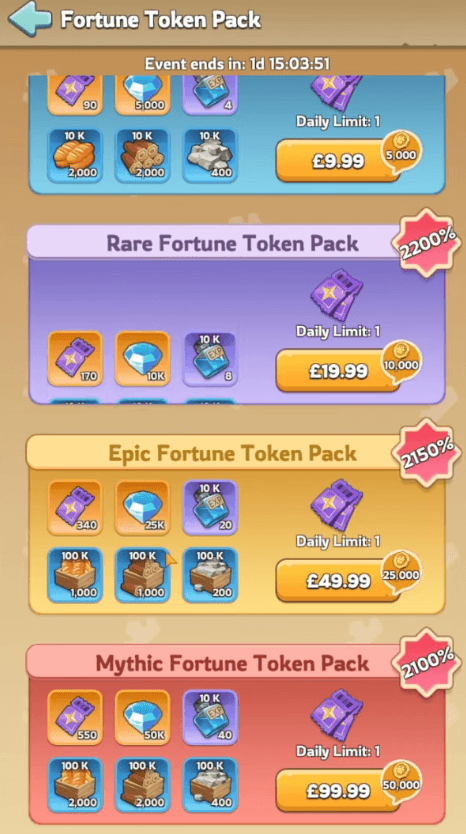
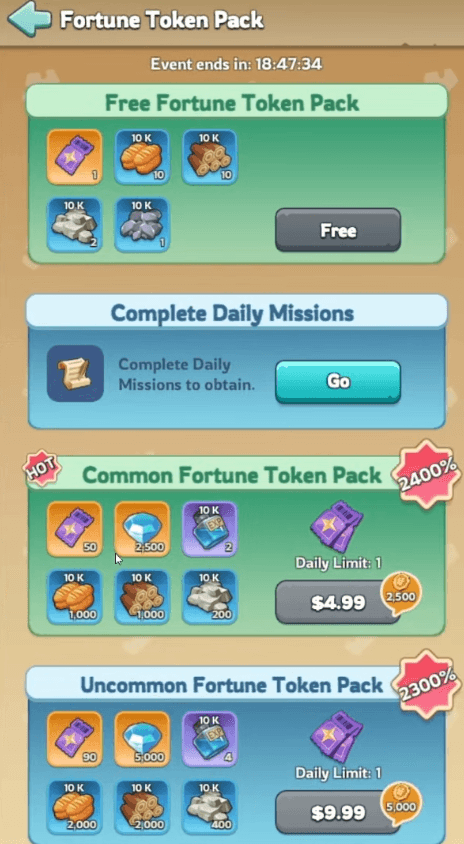
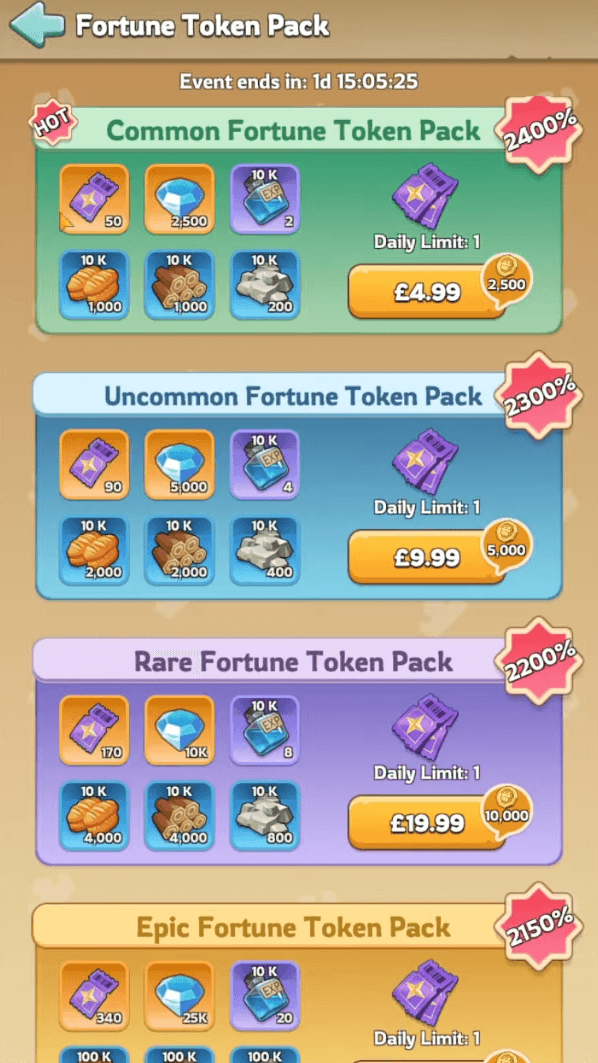
To master the event, one must first distill the primary methods of token accumulation. For the Free-to-Play (F2P) or low-spending player, maximizing the 22-token daily yield is mandatory. This is achieved through the Daily Mission chests, which provide tokens in increments of 2, 2, 5, and 10. Over a standard two-day event, this grants a baseline of 44 tokens. However, the elite strategist also exploits the "Free Fortune Token Pack"—a daily claim providing 1 token alongside food, wood, and stone—and the single free daily draw. For those looking to scale, the "Fortune Token Pack" tiers ($4.99 for 50, $9.99 for 90, up to $99.99 for 550) offer a structured entry point, though the value per dollar diminishes as the tiers escalate.

Evaluating the Purchase Value

Because Fortune Tokens do not expire, they represent a unique asset that can be weaponized through hoarding. Unlike limited-time currencies, these tokens can be carried over indefinitely, allowing players to wait for specific reward rotations or high-server-age prize pools.

The "So What?" Layer

Evaluate the carry-over mechanic as the ultimate power move. Since a two-day event only yields 44 free tokens—not enough to guarantee a "Wish Reward" hit through a full board clear—hoarding is the only way to "brute force" a win. By aggregating hundreds of tokens over several months, a player can sustain the escalating costs of a high-multiplier round without exhausting their reserves.

Transition: Once the economy of tokens is secured, the strategist must pivot to the most critical pre-game decision: the Wish Reward.

2. Strategic Goal Setting: Choosing Your "Wish Reward"

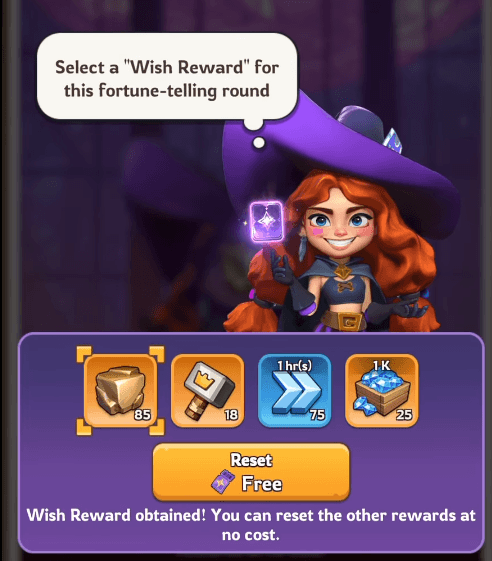
The "Wish Reward" functions as the North Star for your entire divination round. It is the only guaranteed high-value asset that resets the board for free upon discovery, effectively serving as the round’s termination point.

Tiered Reward Analysis

Selection must be dictated by your Town Hall (TH) progression, as the utility of specific items drops off a cliff once certain milestones are reached. Furthermore, rewards scale based on server age; what appears as 20,000 Diamonds or 70 True Gold in a young server will evolve into 25,000 Diamonds or 85 True Gold as the meta matures.

  • Early Game (Town Hall <30): Prioritize time. 75-hour Construction Speedups (or 60-hour variants) are the priority to bridge the gap to the late game. Forgehammers (typically 16-18 units) also hold high value for essential gear progression.
  • Late Game (Town Hall 30+): Once the city reaches level 30, construction speedups become a "dead investment." At this stage, you must synthesize your needs around rare materials. The non-negotiable targets are 85 units of True Gold or the high-volume Diamond pulls.

The "So What?" Layer

Advocate for absolute hoarding if the server has not yet unlocked True Gold as a selectable reward. Spending tokens on mid-tier speedups when True Gold is on the horizon is a failure of long-term resource management. If your Town Hall is at or near level 30, the most strategic move is to cease all pulls and save for the next event rotation.

Transition: With the target locked, we move from the "what" to the "how"—the mechanical execution of the draw.

3. The "Rule of Four": Optimizing the Mathematics of the Reset

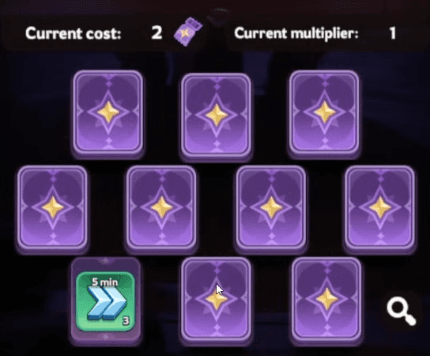
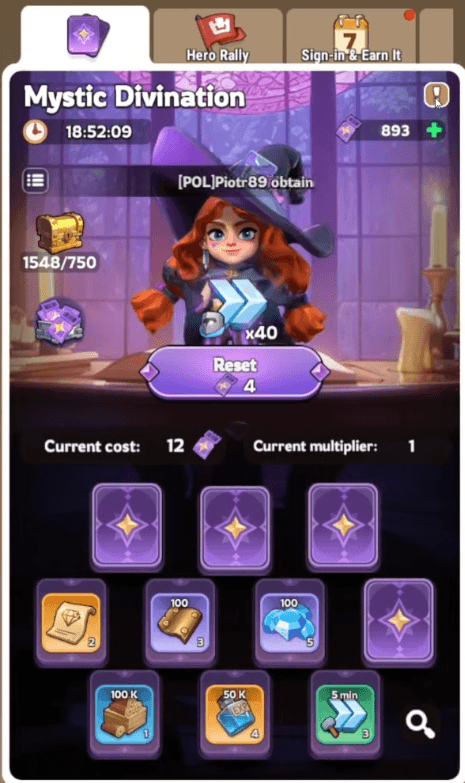
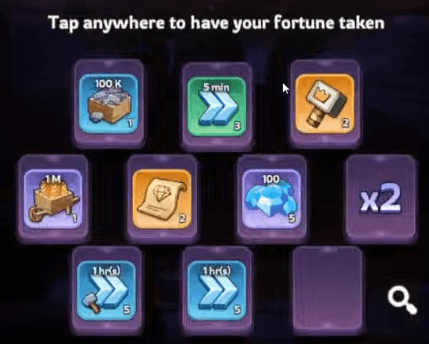
The Mystic Divination board is an escalating cost trap. The first card costs a single token, but the price rises steeply with every subsequent click. To stay ahead of the curve, elite players employ the "Rule of Four."

Analyzing the Cost-Benefit Ratio

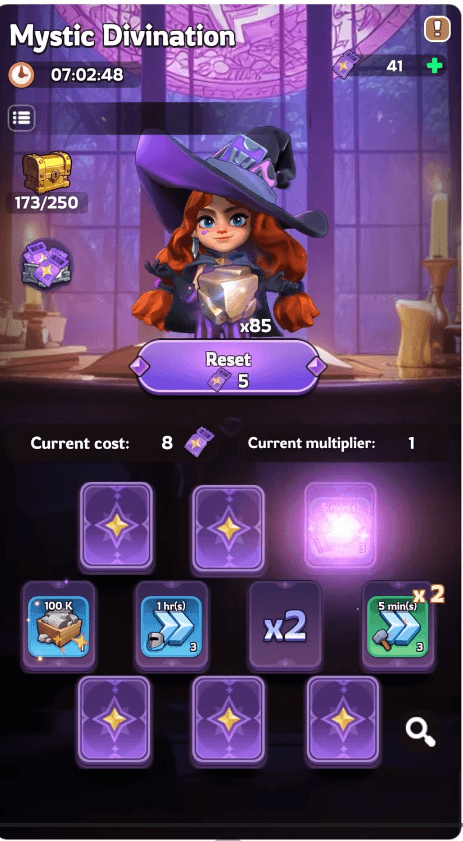
The mathematical sweet spot exists in the first four cards. The costs follow a fixed progression: 1, 2, 3, and 4 tokens. For a total of 10 tokens, you reveal a significant portion of the board at the lowest possible price point. Beyond the fourth card, the cost jumps to 6, 8, 12, and eventually higher, where a single card can cost more than the entire first four combined.

Synthesizing the Reset Mechanic

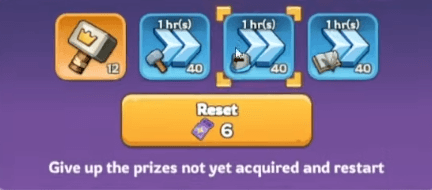
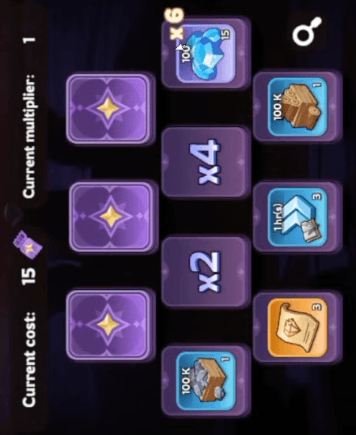
The "Reset" button is the strategist's primary tool for cost control. While the initial reset cost starts at 15, it decreases as you reveal cards. Visual data from the UI confirms that after the fourth card is pulled, the reset cost drops to 6 tokens.

Visual Data Integration: Auditing the Board

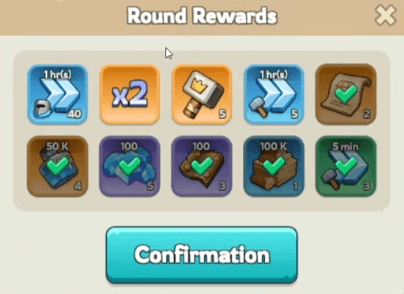
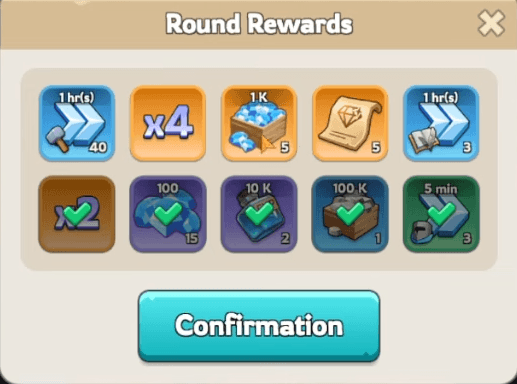
The "Confirmation" screen serves as your strategic dashboard. It uses a system of green checkmarks to indicate acquired low-value assets. By utilizing this screen, the strategist can visually audit the remaining high-value "Wish Rewards" or "Multipliers" left on the board before committing to a reset. If the ticks show only garbage resources remaining, a 6-token reset is the only logical choice.

The "So What?" Layer

Critique the "Sunk Cost Fallacy" that plagues average players. Many feel that because they have already spent 10 tokens, they must continue to the 10th card to "justify" the investment. This "greedy" playstyle can cost upwards of 100 tokens. In that same span, a player using the Rule of Four could have refreshed the board multiple times, exponentially increasing their chances of hitting the Wish Reward at a fraction of the per-card cost.

Transition: The only exception to the Rule of Four is the appearance of the event's most powerful, albeit dangerous, mechanic: the Multiplier.

4. Multiplier Stacking: The Path to "Crazy Rewards"

Multipliers (x2, x3, x4, x5) are the only variables that justify "going all the way" to the final card. They act as force multipliers, but they carry a hidden danger that most players overlook.

Synthesizing Multiplier Interaction

Multipliers in Kingshot are additive. If a player reveals a x2 and a x4 multiplier, they are stacked to a x6 total. This transforms every subsequent reward on the board into a "mega-pull," such as turning a standard speedup into a 280-hour windfall. However, a crucial warning: multipliers also multiply the token cost of subsequent cards. This creates a high-stakes environment where one must have a massive token reserve to finish the round.

The Holy Grail of Divination

The ultimate success in this event comes from finding multiple multipliers early in the round.

"The only time we actually go all the way is if we find two multipliers on the same cards... that's the holy [__]... 280 hours [of speedups]."

The "So What?" Layer

Evaluate the risk/reward pivot: If you reveal a x2 multiplier on your first or second click, the "Rule of Four" still applies. However, if you hit a stack of x6 or higher within the first four cards, the mathematical value of the remaining cards increases exponentially. Only in this specific scenario is it advisable to exhaust your token supply to clear the board, provided you have the bankroll to survive the inflated costs.

Transition: While the numbers provide a clear path, many players are still distracted by the "rituals" and myths of the game.

5. Debunking the "Hidden Tricks": Logic vs. Luck

In the absence of a strategy, players often invent "patterns" to explain their results. These rituals provide a false sense of agency in what is fundamentally an algorithmic system.

Analyzing the "Pattern" Myth

Common alliance wisdom suggests specific clicking patterns—such as the "Middle-Right-Far-Right" trick—can trigger the Wish Reward. Live data proves this false; in multiple recorded instances, following these patterns resulted in the exact opposite of the intended reward, revealing low-tier resources instead. The algorithm does not care where you click; it only cares about the pre-set probability of the cards.

Synthesizing the "Lucky Account" Theory

There is a persistent observation regarding "Farm Accounts" vs. "Main Accounts," where secondary accounts seem to pull high-value rewards with less effort. While this fuels the "lucky account" myth, it is more likely a result of high-volume variance across multiple accounts rather than a weighted algorithm favoring low-power players.

The "So What?" Layer

Distill the reality: Mystic Divination is a game of mathematical discipline, not clicking patterns. Success is found in the Rule of Four, not in "lucky" rituals. Every click is an independent event governed by the board's internal logic; treating it like a skill-based pattern game is a fast track to resource depletion.

Transition: Finally, we must assess whether the event's premium packages offer a true return on investment for the spending player.

6. Financial ROI: Is the "Legendary Friday" Package Worth It?

Monetization in Kingshot often uses "limited time" framing to obscure actual value. To judge value, we use the gold standard: the 1 Dollar to 10 True Gold ratio.

Direct Value Comparison

Package Tier

Primary Reward

Secondary Assets

Relative Value (vs. 1:10 Ratio)

Legendary Friday

27 True Gold

5 Rallies

Poor (Sub-optimal ratio)

Weekly Card

~150-160 True Gold

Various

High (Exceeds benchmark)

Fortune Token Pack ($5)

50 Tokens

2,500 Gems + Resources

Moderate (Strategic value)

Analyzing the Ratio

The "Legendary Friday" package is largely a marketing story designed to create urgency. At only 27 True Gold, it fails the 1:10 efficiency test. By comparison, the Weekly Card provides nearly six times the True Gold for a similar investment profile.

The "So What?" Layer

Evaluate the investment: For players looking to maximize their "Design" or "True Gold" yield, the money is better spent on Weekly Cards or entry-level Fortune Token Packs. The latter provides the currency needed to execute multiple "Rule of Four" rounds, which offers a much higher potential yield than a static package of 27 gold.

Transition: With the financial and mechanical strategies in place, the path to certain victory is clear.

Conclusion: Turning Divination into Certainty

In the high-stakes meta of Kingshot, the Mystic Divination event is a tactical exercise in patience and probability. It is not a slot machine; it is a test of your ability to resist the "greedy" play and adhere to the Rule of Four. By ruthlessly prioritizing late-game assets like True Gold and ignoring the siren song of clicking patterns, you transform a game of chance into a reliable engine for account progression.

Call to Action: In the next event, apply the Rule of Four and reset aggressively once the card cost exceeds the 6-token reset threshold. Track your "Gems Per Token" ratio and compare it to your previous "board clear" attempts. You will find that the "luckiest" players in the kingdom are simply the ones with the best math.

The intersection of patience and power is where the game is truly won—will you continue to gamble, or will you start to calculate?